
Leading
Tucson
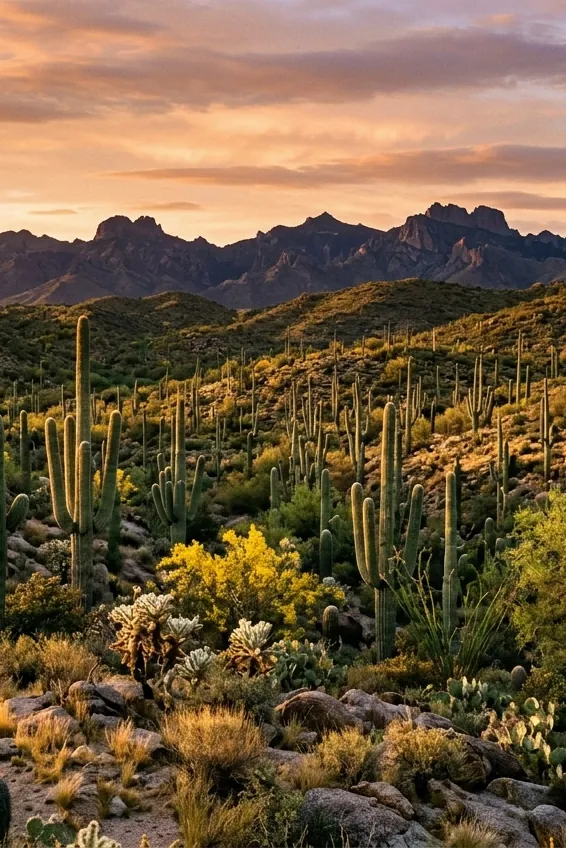
Mild winters, saguaro desert and a city that already turns old motor courts into homes.
Illustration
Why Tucson
Tucson’s winters are a gift. December to February afternoons average 66 to 69°F, the desert blooms after winter rain, and for nine months of the year the afternoon high is 70°F or more. It is a real city of a million people, with a university, buses that have been free to ride since 2020 and a comprehensive stroke centre at Banner University Medical Center, about 20 minutes from the middle of the county.
It also has the clearest record of anywhere on our list of doing the very thing we would do. The city turned two mid-century motor courts on Oracle Road into Milagro on Oracle, 63 affordable apartments for people 55 and older, which has since won two awards, and turned the Amazon Motel into 30 permanent homes in 2025. Arizona law now lets a city of this size convert an obsolete commercial property of one to twenty acres into apartments without a rezoning hearing.
Tucson’s own code protects gay residents in housing, work and public places. Beyond the city line, protection rests on a state agency’s reading of sex discrimination law rather than a statute, so we would rather build inside Tucson or close to it.
Summer is the bargain: about 68 days a year at 100°F or more, from June into September. Life would shift to mornings, evenings, shade and pools, the way Tucson already lives.
How it could work here
An old motor court is the realistic start; a village at the desert’s edge is possible with more work, and so is a cluster of small homes in the city itself.
Walk through it in 3D, with a narrator
Winter afternoons here average 66 to 69°F, and summer afternoons 99 to 101°F.
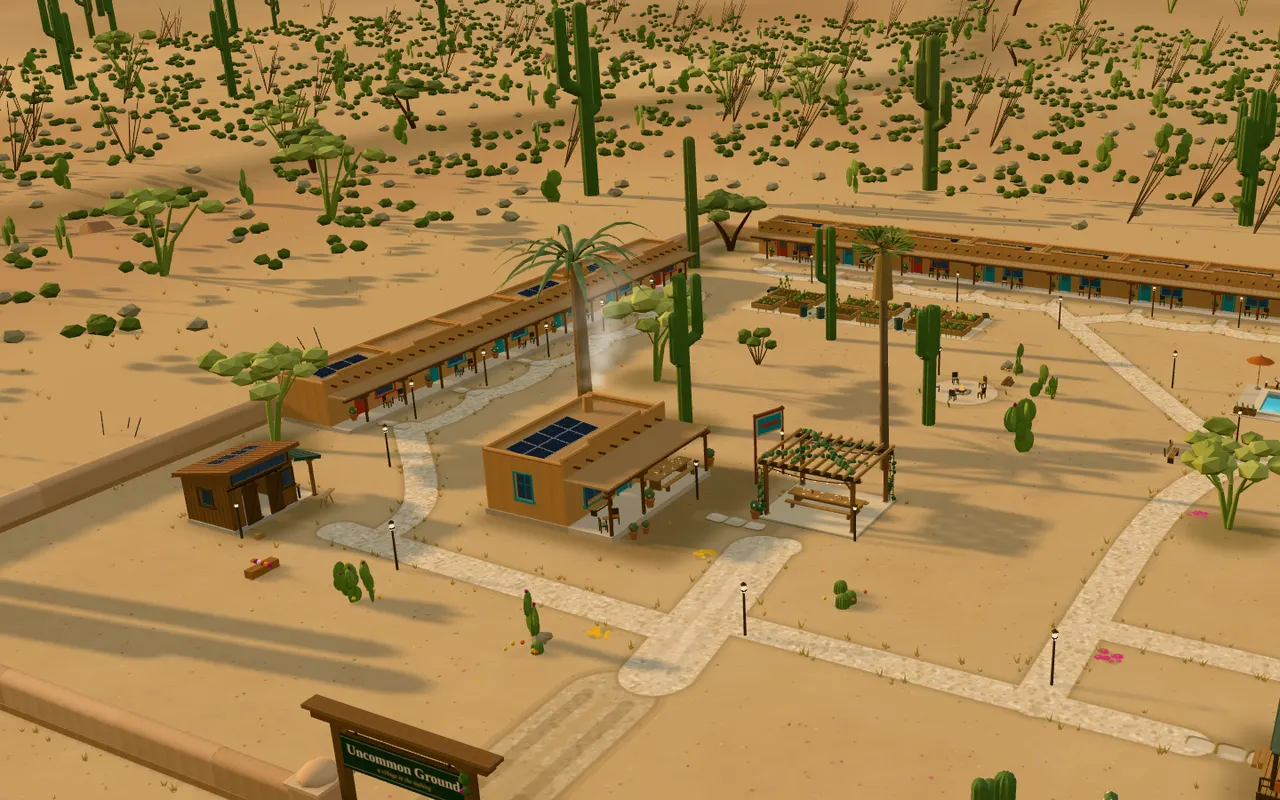
An old motor court, made home
Realistic now
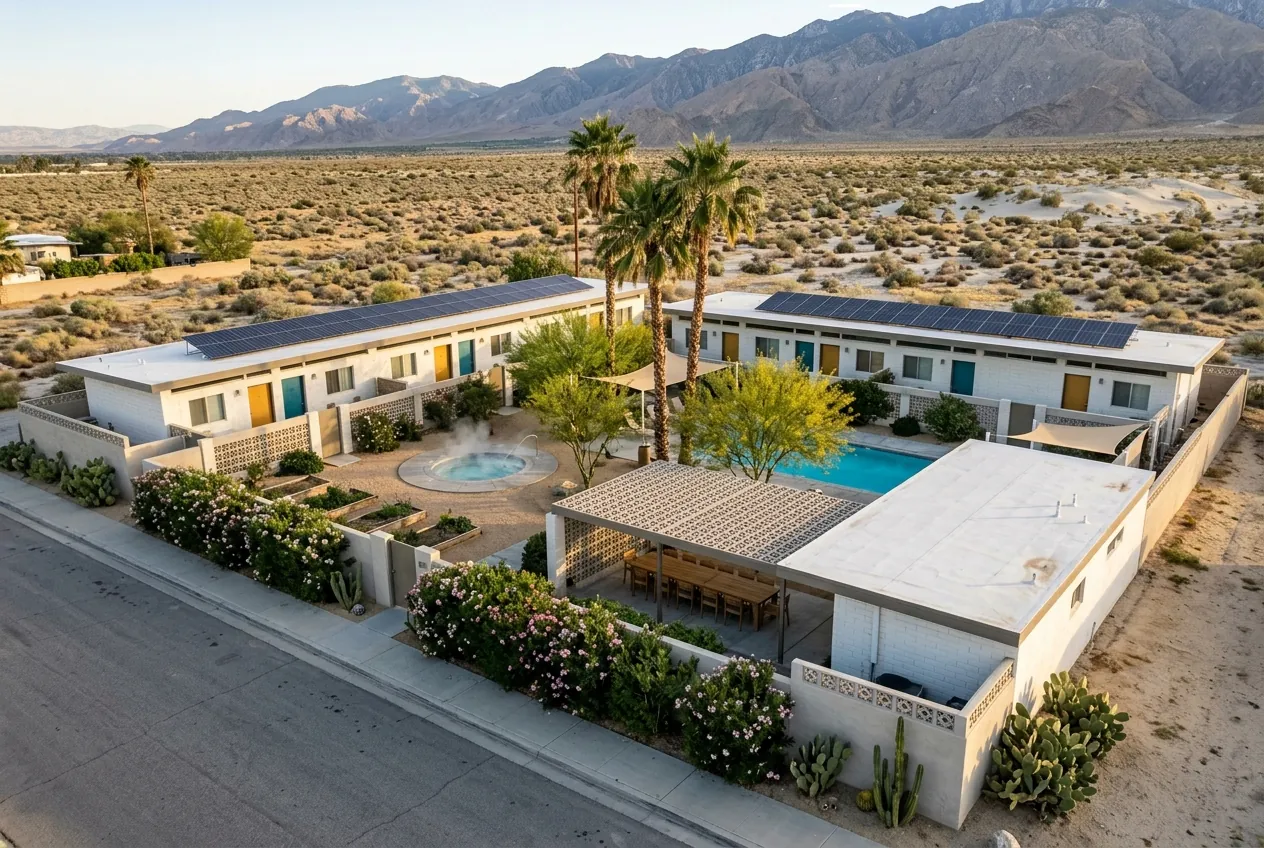
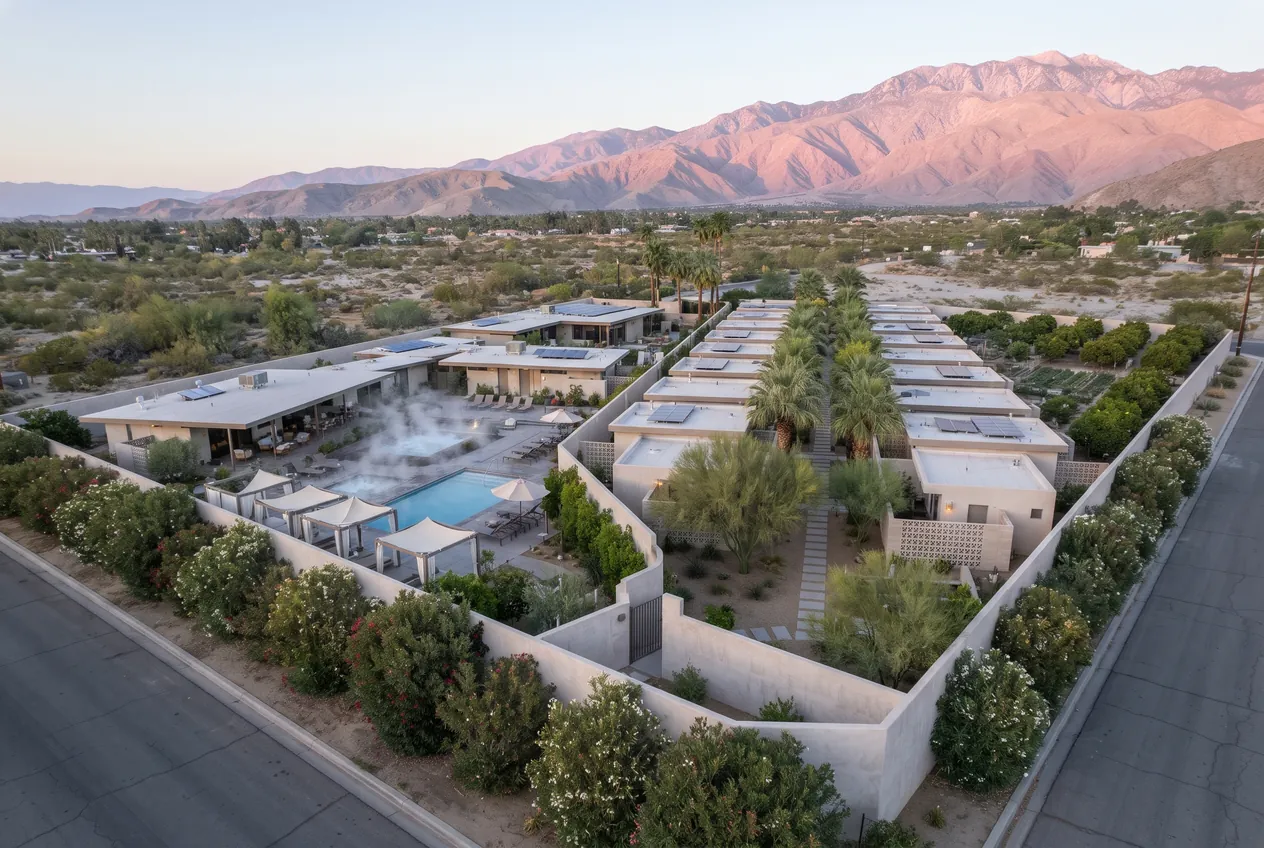
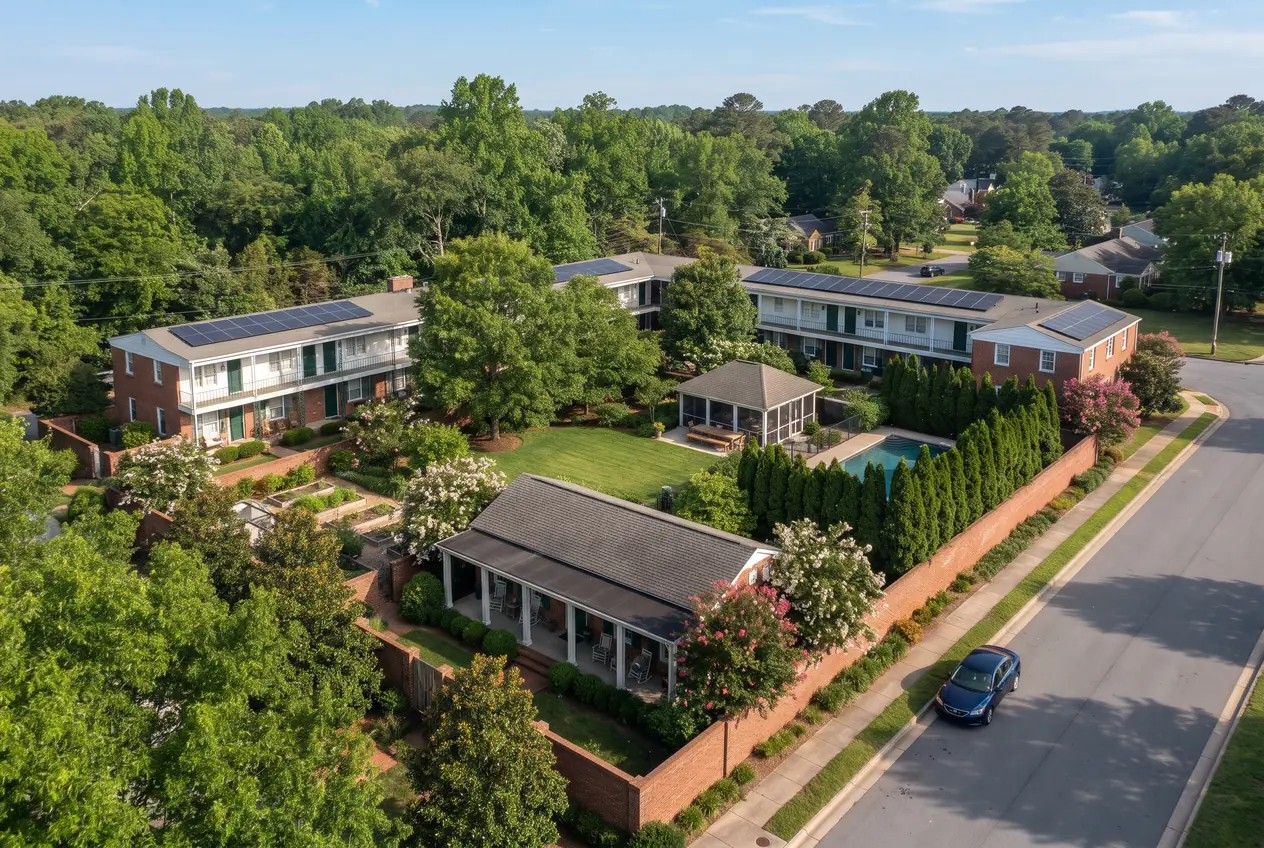
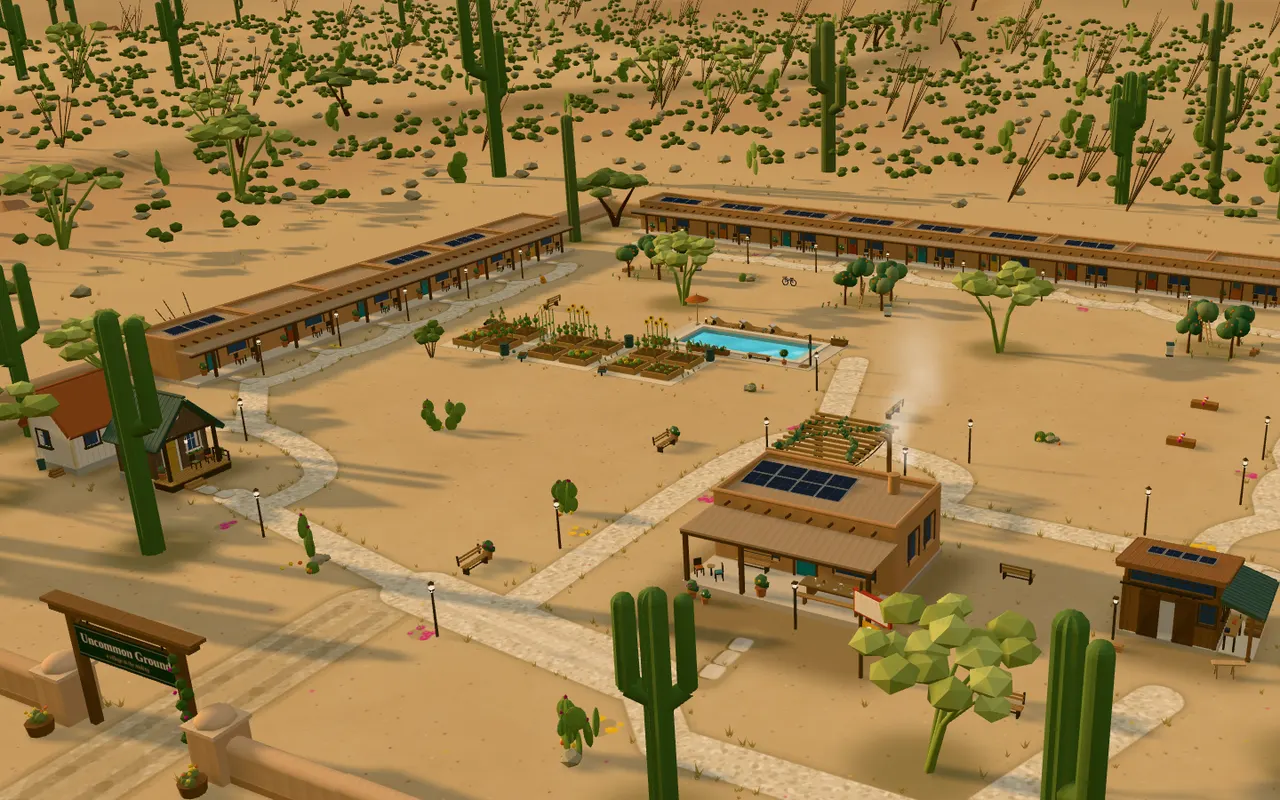
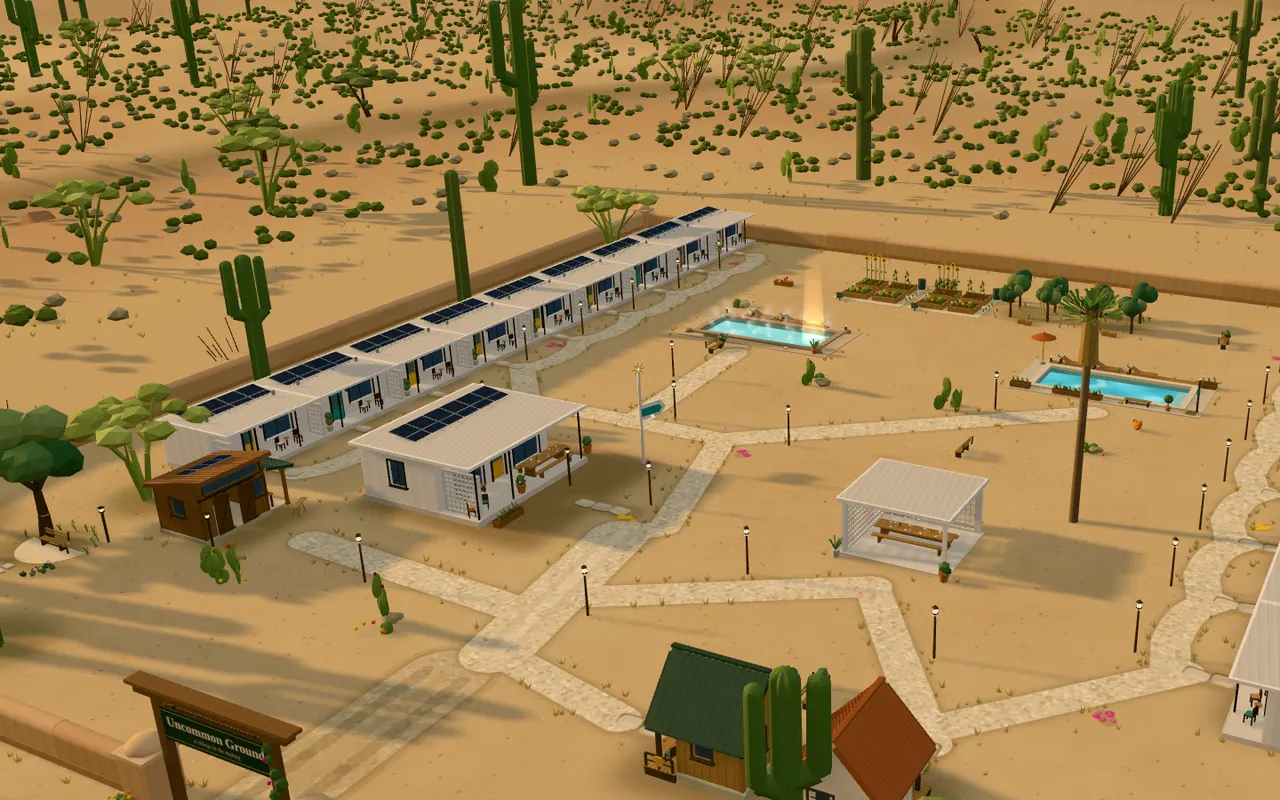
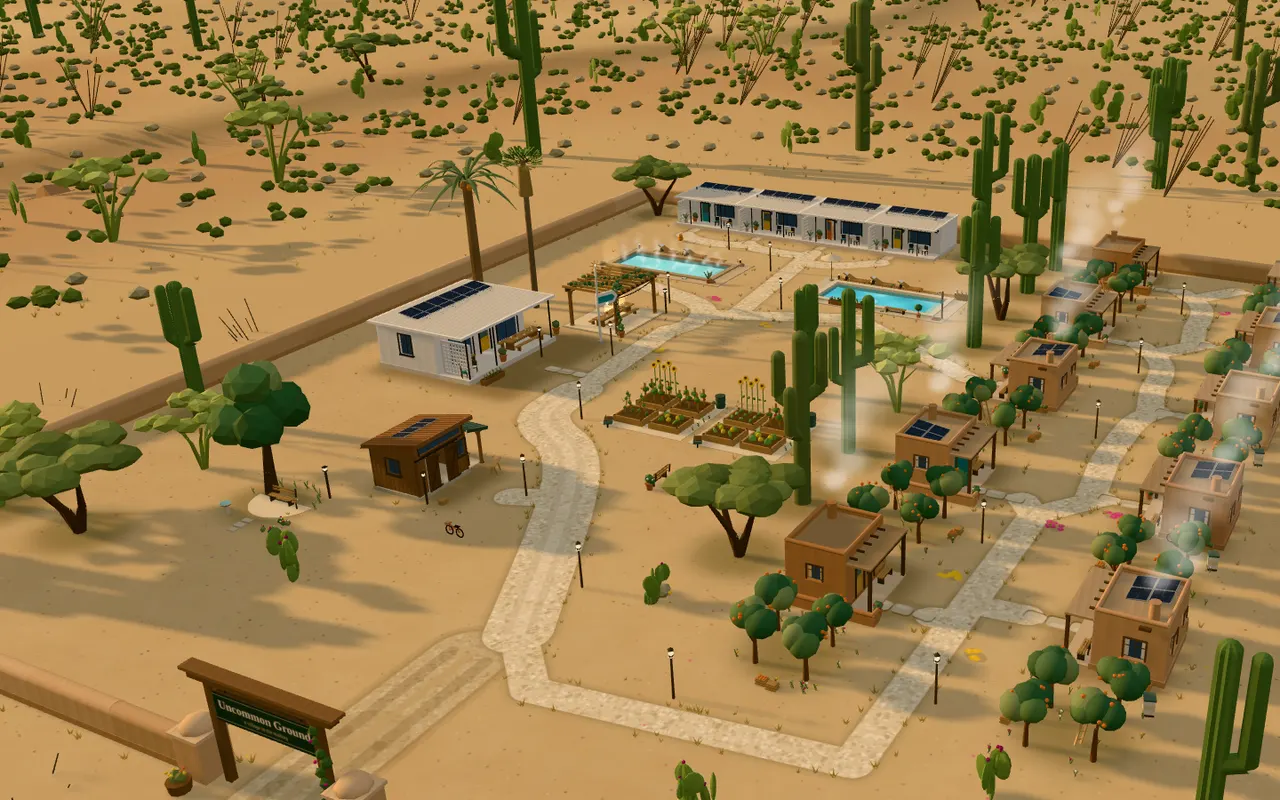
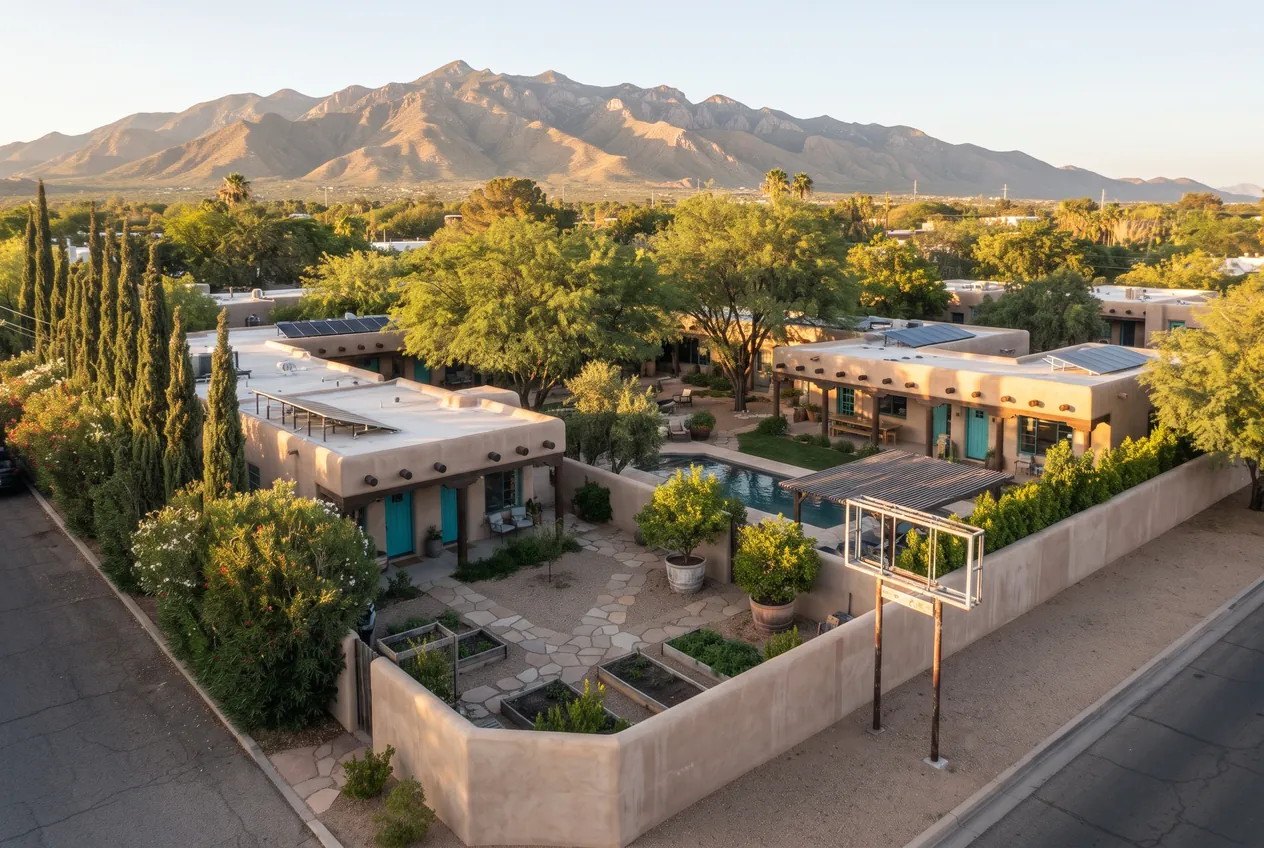
On an acre or two along Oracle Road or the Miracle Mile, a motor court of twenty or so rooms becomes small homes around a shaded courtyard with a pool, citrus and vegetable beds. The old office becomes the shared kitchen, with a long table on its porch. Thick walls and a row of cypress keep the courtyard private from the street.
The city has done exactly this twice, and state law allows it on a site of one to twenty acres without a rezoning hearing.
- A pool in the walled courtyard
- Old office, now the shared kitchen, with a long table on its porch
- Motel rooms, now small homes
- Citrus in big pots
- Vegetable beds
- A row of cypress screens the street
- The Santa Catalina Mountains
The hard partState law asks that one home in ten stay affordable to low and moderate incomes for twenty years, which suits us. Sites in historic districts, near airports or under an acre need the ordinary rezoning route instead.
Walk through it in 3D, with a narrator
Winter afternoons here average 66 to 69°F, and summer afternoons 99 to 101°F.
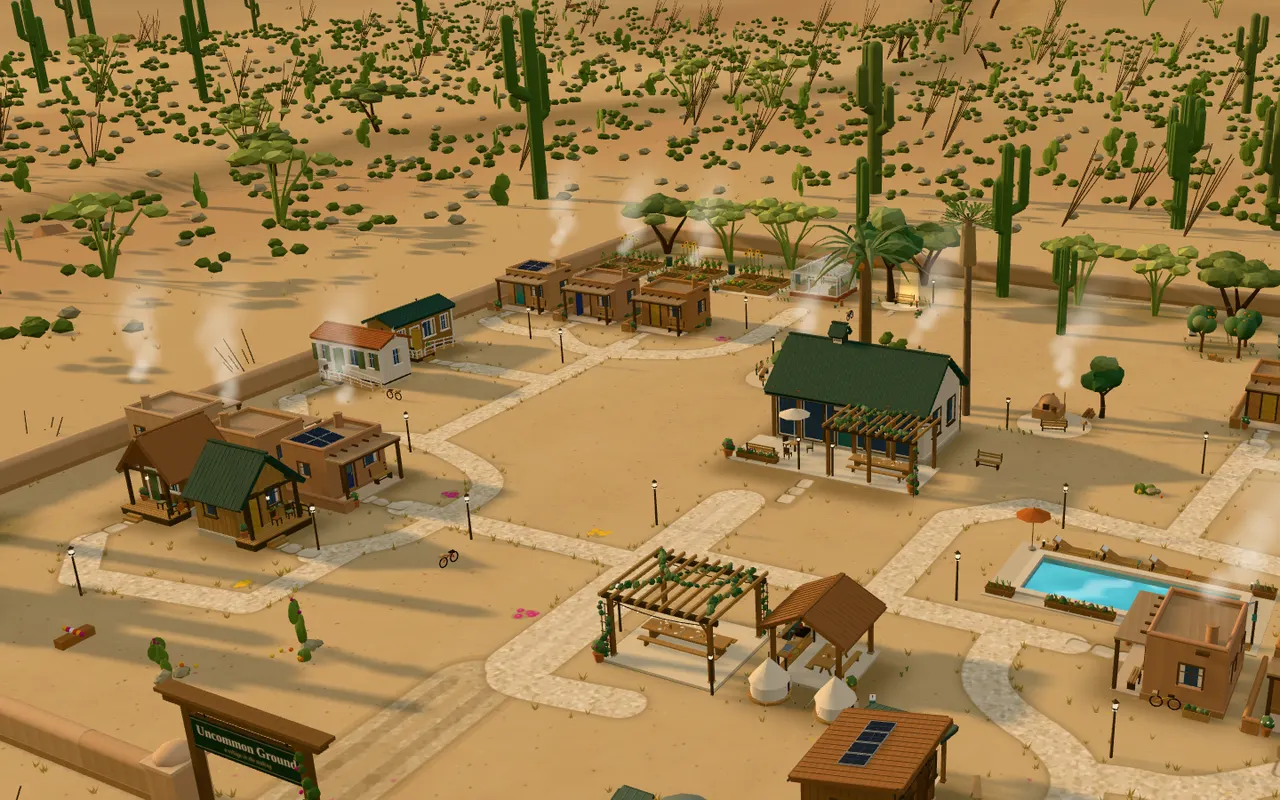
A village at the desert’s edge
Possible, with more work
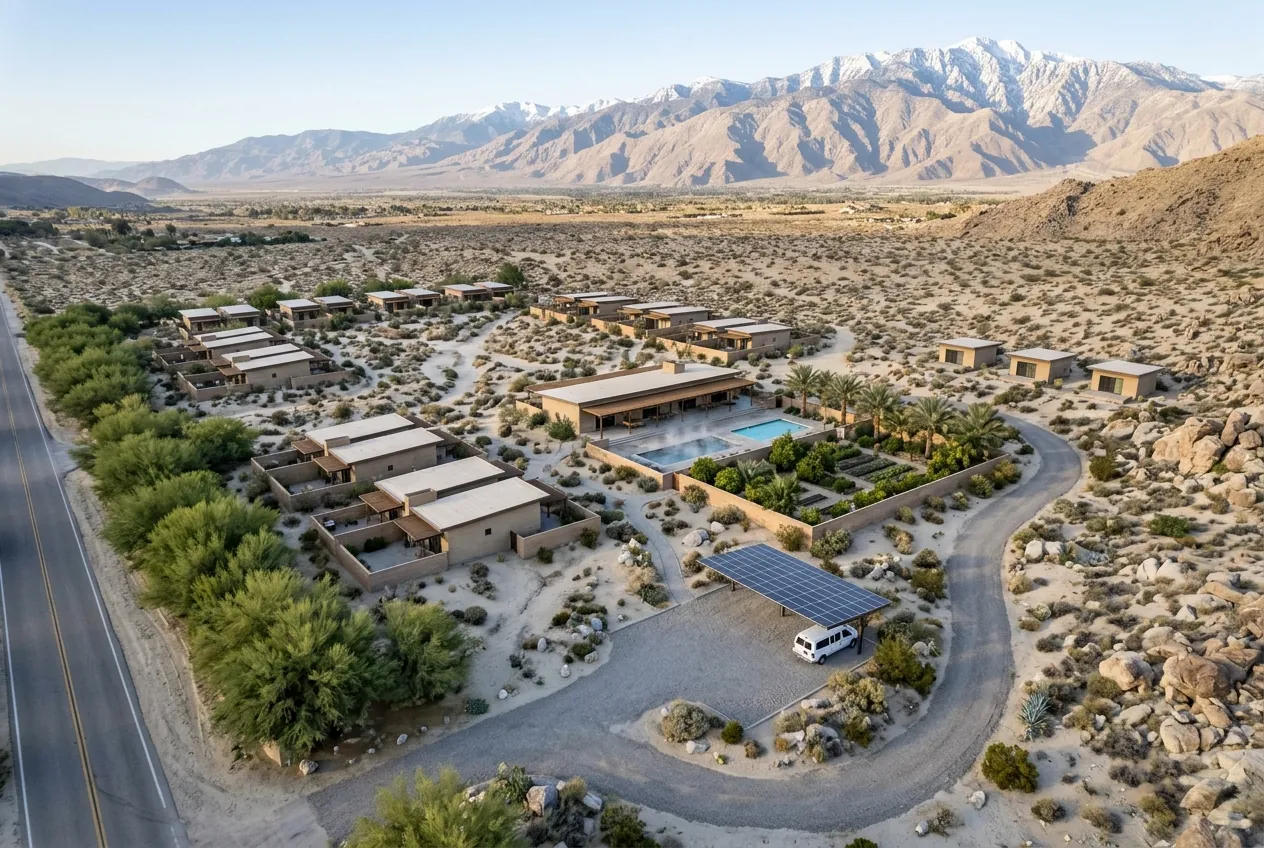
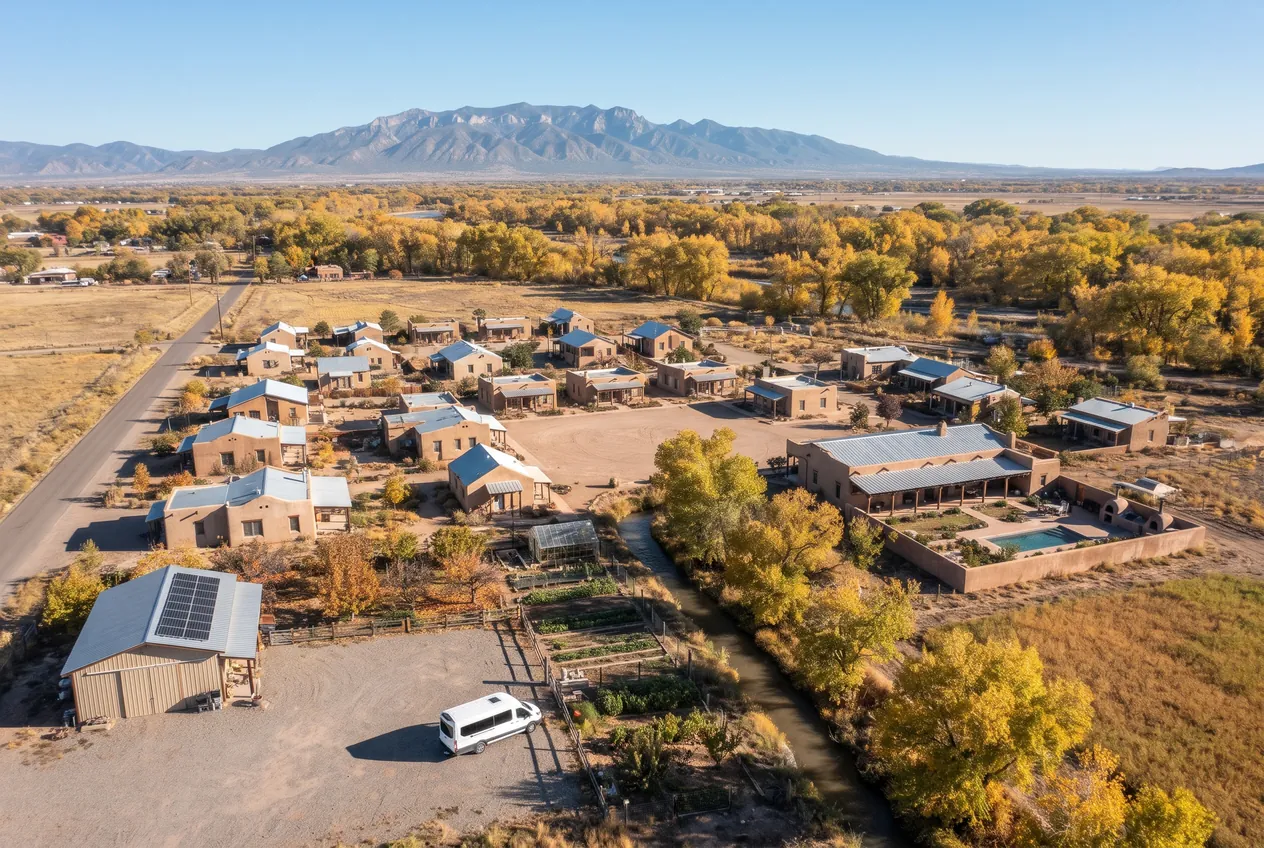
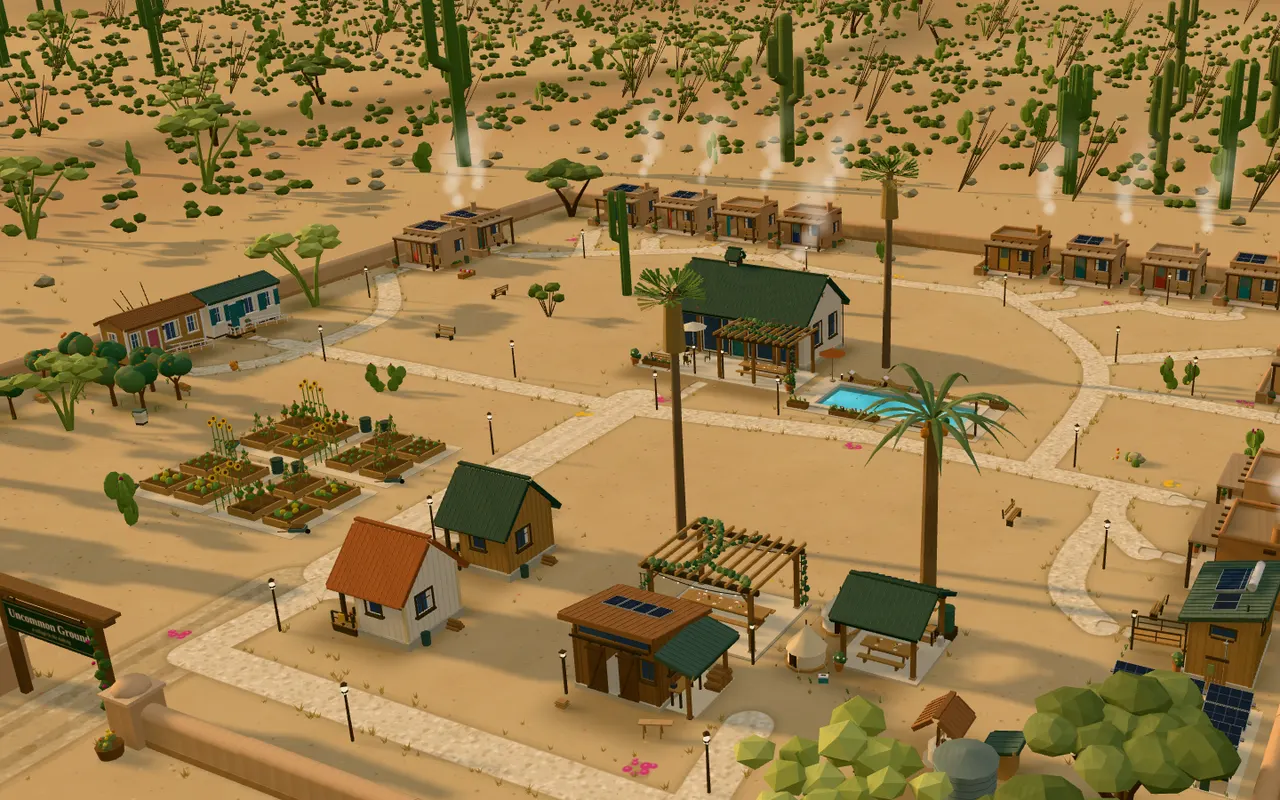
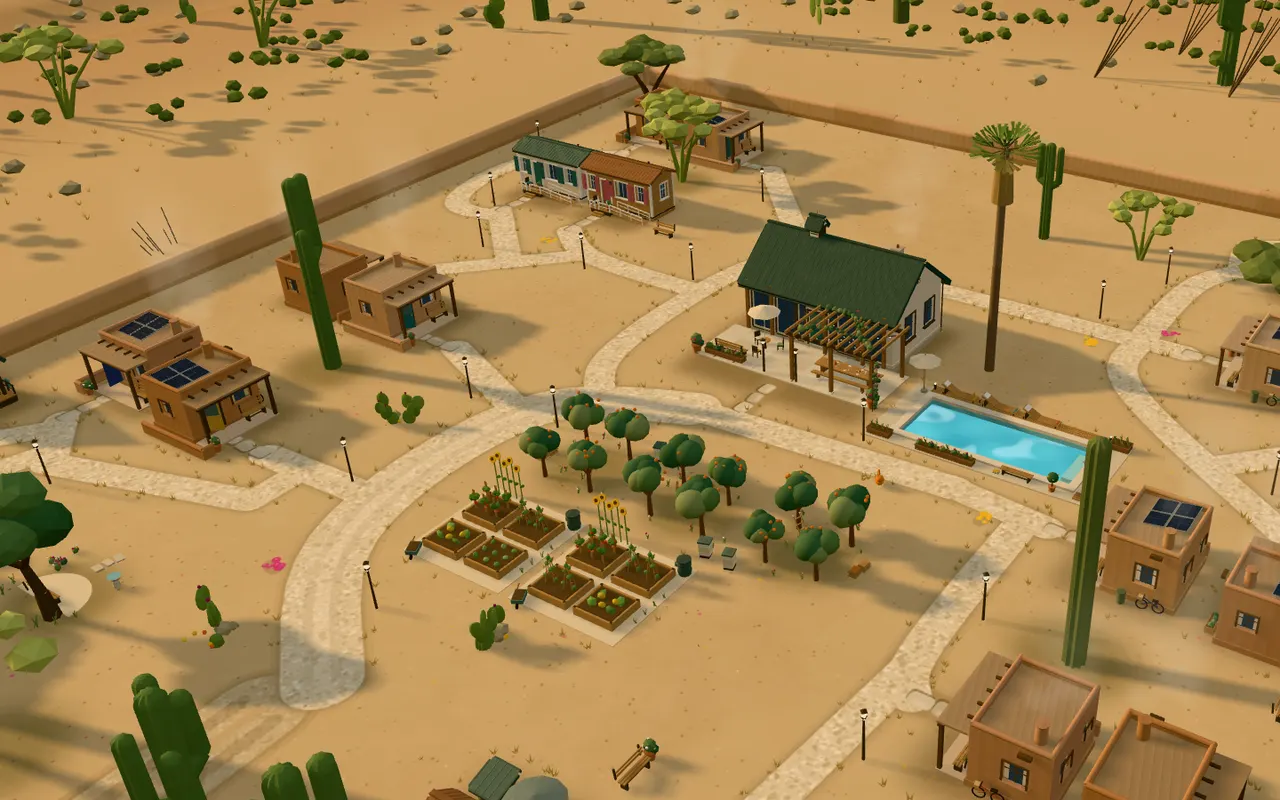
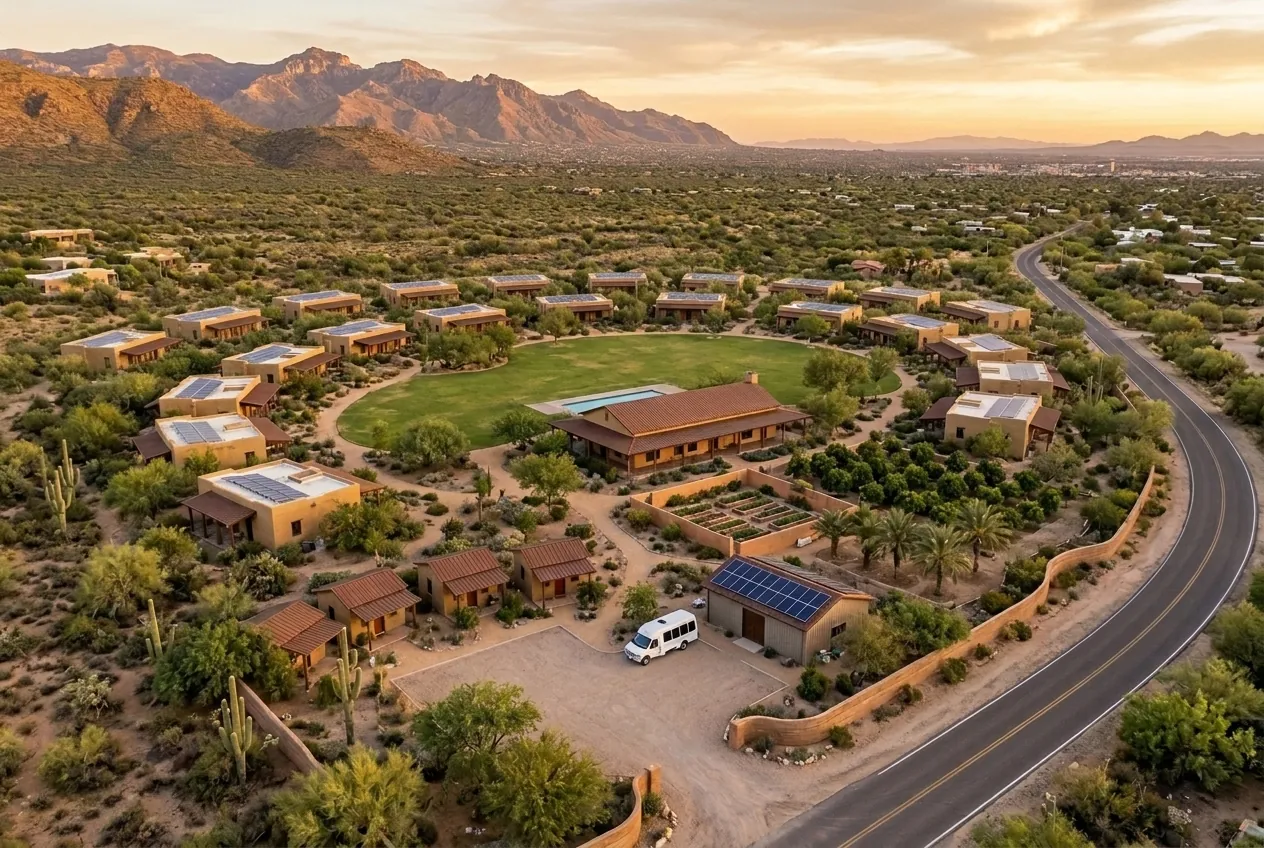
On twenty acres or more near Picture Rocks or Avra Valley, two dozen small homes curve around a green, with a common house and pool, a walled kitchen garden, a citrus and date orchard, a workshop and a few guest cabins by the gate.
Pima County allows clustered homes on about 36,000 square feet each in some rural zones, which is roughly twenty acres for two dozen homes; other rural zones need far more land per home.
- Common house and pool
- The green
- Homes in curving rows
- Walled kitchen garden
- Citrus and date orchard
- Workshop and one shared van
- Guest cabins by the gate
The hard partWater. Dividing land into home lots brings in Arizona’s 100-year assured water supply rule, so the green in this picture would have to be earned. Out here the trip to the HIV clinic takes three buses, so a van and a driving rota would be part of daily life.
In the city itself, Arizona now lets single-family lots within a mile of downtown hold up to four homes, and every lot can add two cottages, so a cluster of small homes across a few neighbouring lots is possible, at city prices.
Still to find out
- Which Oracle Road and Miracle Mile sites sit inside the historic district
- What an acre-plus motel site costs today
- Water for any land outside the city
- How long the fare-free buses last; the council has extended them six times
- How a private naturist club fits the city’s zoning
Know Tucson, its old motor courts or the land out toward Picture Rocks? If you live there, have stayed there or would move there, tell us what we should know.
Sources for Tucson
- City of Tucson: Milagro on Oracle receives a second award
- City of Tucson: Amazon Motel and Amazon Flats (April 2026)
- Arizona Revised Statutes 9-462.10, adaptive reuse
- Arizona Revised Statutes 9-462.13, middle housing
- Arizona Revised Statutes 13-1402, indecent exposure
- City of Tucson: discrimination complaints
- Sun Tran fares
- Arizona Department of Water Resources: Tucson AMA
- Movement Advancement Project: Arizona