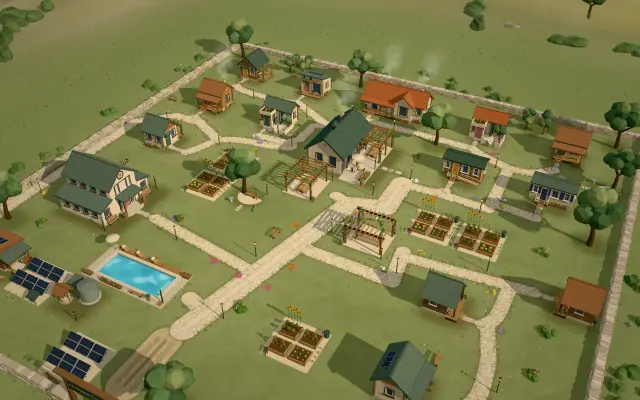
One of the biggest lessons from the working budgets is how much the source of the starting money matters. Buying land and making it ready to live on is expensive, even when the individual homes are modest. If most of that money is borrowed, the regular payments have to cover the loan as well as running the village. Gifts or capital that can stay in the project for a long time could lead to a different monthly cost, depending on what repayment or return is expected.
Our first budgets priced a rebuilt camp with paid staff cooking, cleaning and driving, and they made the village look out of reach. In November we priced it the way I actually picture it, with us doing much of the work and paid help as an optional extra. We looked at three ways to begin: turning an old motel into small homes, building small homes ourselves on land we own together, and putting new factory-built homes on that land.
These are early estimates, not prices. Each home would need roughly $130,000 to $200,000 of starting money, including its share of the land and shared buildings. The motel came out lowest. Taxes, insurance, utilities, upkeep and savings for repairs came to roughly $500 to $650 a month for each home.
The rest depends on how that starting money is raised. With ordinary bank loans, the monthly cost comes to about $1,500 to $2,000, which is too much for a guy living on Social Security. If more of it comes from gifts, or from money that asks little or no interest, the cost drops to roughly $900 to $1,200, and that could work. There’s a lot we still have to check on a real property, like the water system, insurance and local fees.
Guest stays, events and businesses could contribute income, and they could be a wonderful part of village life. They also need staff, food, cleaning, maintenance and places for people to stay. We’re testing what happens when bookings are weaker than hoped and keeping those costs in the account before treating visitor income as help with residents’ bills.
I want people with fewer resources to have a real place in this. Some of us might choose to contribute more, through gifts or agreed support for living costs. We haven’t asked for pledges toward a home or chosen an arrangement — the monthly pledges on the support page keep the current work going and don’t reserve a home or set a future resident price. We need to explain what each payment would mean, including whether it buys a home, lends money to the project or helps without an expectation of repayment. If money is meant to come back later, the plan has to show where it could come from. We don’t yet have a resident price to offer.